


Asiaxxxtour2023analandthroatsessionxxx10 New -
The rise of the internet and cable television shattered this uniformity. Audiences fractured into niche communities. Content choice expanded exponentially, allowing individuals to seek out specialized material that aligned precisely with their specific interests.
The lines between social media, streaming, and gaming have blurred. Content is no longer tied to one device; instead, users follow personalities and IPs across multiple services. The Attention Economy:
The introduction of Netflix’s streaming service and subsequent competitors (Hulu, Amazon Prime, Disney+) severed the link between time and content. The "binge-watch" model collapsed traditional narrative pacing, prioritizing long-form serial storytelling over episodic structures. This shifted power to the consumer, who now acts as the programmer of their own media diet.
In addition to streaming services, social media has become a major player in the entertainment industry. Platforms like Facebook, Instagram, and YouTube have given rise to a new generation of celebrities, influencers, and content creators who have built massive followings and lucrative careers by creating and sharing engaging content. These influencers have become tastemakers, shaping popular culture and influencing the way we think about fashion, beauty, music, and lifestyle.
Platforms like TikTok and Instagram Reels have revolutionized entertainment through short-form video. These platforms utilize variable reward schedules—a psychological mechanism similar to slot machines—to induce "flow states." The infinite scroll removes stopping cues, leading to prolonged consumption sessions. asiaxxxtour2023analandthroatsessionxxx10 new
As we look toward the future, the integration of and Virtual Reality (VR) promises to redefine entertainment once again. We are moving toward "personalized media," where AI might help generate unique soundtracks or visual experiences tailored to an individual’s mood. Meanwhile, the Metaverse aims to turn media consumption into a 3D social experience, where you don’t just watch a concert—you attend it as an avatar. Conclusion
If you accidentally clicked a link, run a full scan with a reputable antivirus program (like Windows Defender, Malwarebytes, or Bitdefender). Enable Two-Factor Authentication (2FA):
The transition from cable television to services like Netflix, Disney+, and HBO Max has fundamentally changed our viewing habits.
Streaming platforms distribute localized content to global audiences instantly. A series produced in South Korea or Spain can become a worldwide cultural phenomenon overnight, fostering cross-cultural empathy and creating a shared global media vocabulary. The rise of the internet and cable television
However, there are also potential drawbacks to consider:
Asia's culinary landscape is as diverse as it is delicious. Be sure to try:
Are there specific or subtopics you need included?
To explore specific facets of this industry further, would you like to focus on the behind streaming platforms, the psychological effects of algorithmic feeds, or an analysis of emerging AI tools in content creation? Share public link The lines between social media, streaming, and gaming
This paper examines the transformative trajectory of entertainment content and popular media from the mass broadcasting era of the 20th century to the algorithm-driven, on-demand ecosystem of the 21st century. By analyzing the shift from a "lean-back" passive consumption model to a "lean-forward" interactive engagement model, this research explores how digital distribution has fundamentally altered narrative structures, audience psychology, and cultural homogeneity. Special attention is given to the role of data analytics in content creation, the psychological implications of the attention economy, and the emerging fragmentation of the "mainstream."
Modern entertainment doesn't stop when the credits roll. We are living in the age of the and Transmedia Storytelling . A popular media franchise today often spans across: Feature Films Limited Series Video Games Podcasts and AR Experiences
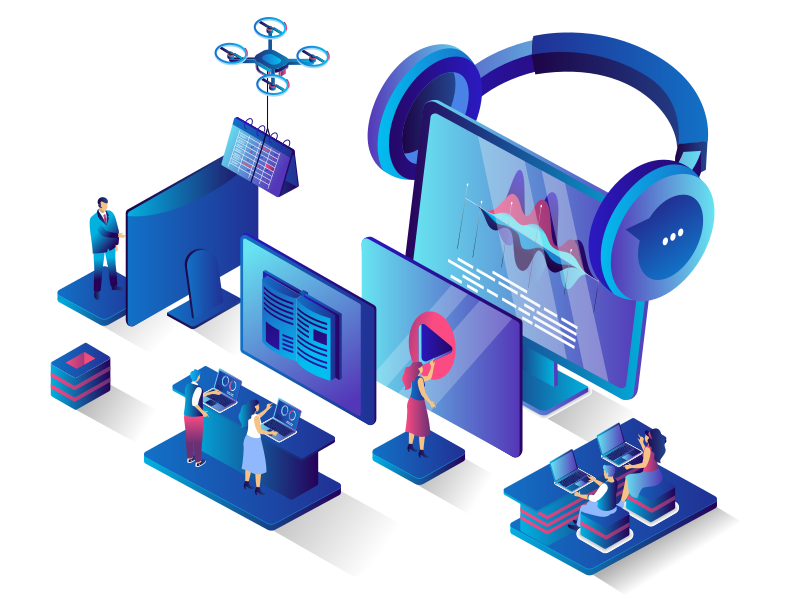
The entertainment and popular media landscape in 2026 is defined by , where traditional boundaries between film, gaming, and social interaction have blurred into a single, integrated experience. Production today focuses on creating multidisciplinary, interactive content that prioritizes personalization and engagement over passive viewing . Core Components of Media Production