Oligoscan is an innovative medical device
Physiological imbalance screening. Non-invasive, no blood test needed.
Learn moreOligoscan easy to use
A quick evaluation of minerals and toxic metals in the palm of the hand.
Learn moreScreening of physiological imbalances helps better health control and trace minerals overall wellbeing.
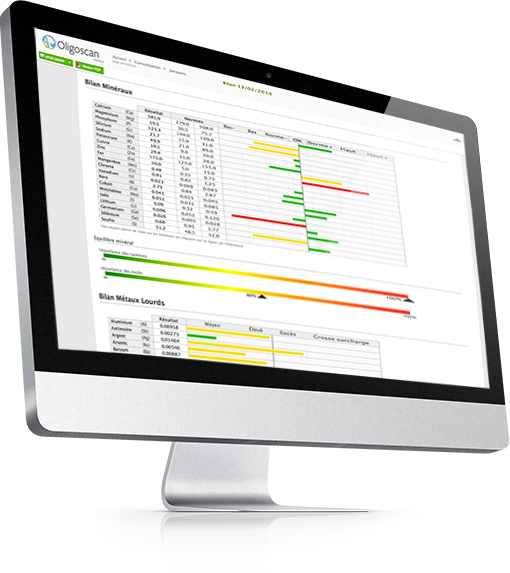
Excess and deficiency in minerals
A risk of toxic metals poisoning
Responsible for aging and numerous other diseases
Instant measurements of minerals, trace elements, oxidative stress and toxic metals.
Oligoscan can be used by all health specialists allowing for rapid and pain free analysis.
The measurement is taken directly by a portable spectrometer connected to a computer
The technology is based on spectroscopy
Evaluation of trace minerals reserves, the level of oxidative stress and toxic metals
Non-invasive measurement taken in situ
The record provided allows for detection of trace elements and minerals deficiencies as well as high rate of toxic metals in the body.
Oligoscan is now used by health professionals in many countries as a solution whenever a quick and accurate analysis of the level of trace elements, minerals and toxic metals is needed.
The Oligoscan uses optical technology : spectrophotometry.

This is a quantitative analytical method of measuring the absorption or the optical density of a chemical.
It is based on the principle of absorption, transmission or reflection of light by the chemical compounds over a certain wavelength range.
Spectrophotometry is used in many areas : chemicals, pharmaceuticals, environment, food, biology, medical / clinical, industrial and others.
In the medical field, spectrophotometry is used to examine blood or tissue.
The Oligoscan is a reliable and scientifically proven tool..
A set of tests and comparative studies have been made by researchers highlighting a correlation between the results of the Oligoscan and those performed in the laboratory.

The speed at which the tool moves against the workpiece.
Published by Sandvik Coromant, a global leader in cutting tools, this handbook has been the "go-to" for engineers, machinists, and students for decades. Unlike purely theoretical textbooks, it focuses heavily on , chip breaking, and practical tooling advice.
Angled surfaces ground onto the edge to direct cutting forces away from the vulnerable tip, maximizing tool reliability in heavy roughing applications. Section 5: Machining Parameters and Optimization
Using extremely high rotational speeds and low feed steps to remove material quickly with low cutting forces.
Stainless steels work-harden rapidly under mechanical stress. Machining operations must maintain a consistent feed rate to ensure the tool tip cuts beneath the work-hardened layer left by the previous pass. Positive rake geometries and robust coolant delivery are required. Heat-Resistant Superalloys and Titanium (ISO S)
Dedicated sections for troubleshooting vibration, surface integrity, and tool-life management. Google Books How to Access it for Free
: You can download specific technical manuals and catalogues as PDFs, such as the Metal Cutting Training Handbook
Modern Metal Cutting: A Practical Handbook (published by Sandvik Coromant
Second in hardness only to diamond, CBN maintains chemical stability when cutting ferrous materials. It is widely used for hard turning steels with hardness ratings above 45 HRC.
Power (kW)=Cutting Force (N)×Cutting Speed (m/min)60,000×Machine EfficiencyPower (kW) equals the fraction with numerator Cutting Force (N) cross Cutting Speed (m/min) and denominator 60 comma 000 cross Machine Efficiency end-fraction Heat Generation and Temperature Distribution
The search for is not a fantasy; it is a smart business move. By leveraging legitimate manufacturer portals, academic resources, and curated public domain texts, you can equip your workshop with world-class knowledge without spending a cent.
The text bridges the gap between theory and shop-floor application. It provides a comprehensive analysis of metal cutting mechanics, tool materials, and wear mechanisms. Key topics include the metallurgy of cutting tools, the physics of chip formation, and the complex interactions between the tool and the workpiece. It is an essential resource for machining engineers, tool designers, and mechanical engineering students seeking to optimize cutting operations, extend tool life, and improve surface finish quality.
Thick coatings (Al2O3, TiN) built for high-temperature turning operations.
Cuts surfaces parallel to the tool axis (slotting, side milling).
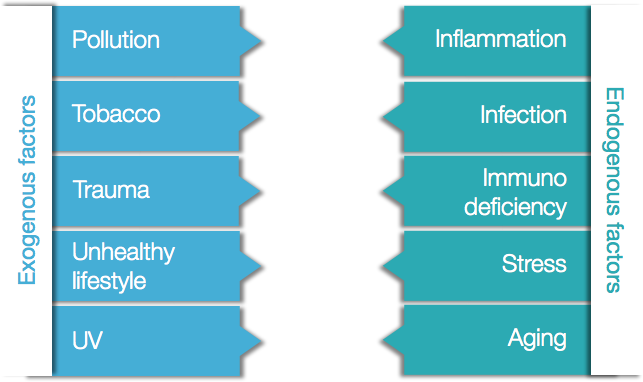
Free radicals are molecules produced in small amounts by the body. These free radicals are very reactive substances, capable of damaging the components of the cells (enzyme proteins, lipid membranes, DNA).
Their production is particularly stimulated by the exposure to sunlight (UV), tobacco, pollution, pesticides, etc.
A diet rich in antioxidants, particularly found in some fruits and vegetables, is essential in fighting free radicals.
Some scientific references :
The speed at which the tool moves against the workpiece.
Published by Sandvik Coromant, a global leader in cutting tools, this handbook has been the "go-to" for engineers, machinists, and students for decades. Unlike purely theoretical textbooks, it focuses heavily on , chip breaking, and practical tooling advice.
Angled surfaces ground onto the edge to direct cutting forces away from the vulnerable tip, maximizing tool reliability in heavy roughing applications. Section 5: Machining Parameters and Optimization
Using extremely high rotational speeds and low feed steps to remove material quickly with low cutting forces.
Stainless steels work-harden rapidly under mechanical stress. Machining operations must maintain a consistent feed rate to ensure the tool tip cuts beneath the work-hardened layer left by the previous pass. Positive rake geometries and robust coolant delivery are required. Heat-Resistant Superalloys and Titanium (ISO S)
Dedicated sections for troubleshooting vibration, surface integrity, and tool-life management. Google Books How to Access it for Free
: You can download specific technical manuals and catalogues as PDFs, such as the Metal Cutting Training Handbook
Modern Metal Cutting: A Practical Handbook (published by Sandvik Coromant
Second in hardness only to diamond, CBN maintains chemical stability when cutting ferrous materials. It is widely used for hard turning steels with hardness ratings above 45 HRC.
Power (kW)=Cutting Force (N)×Cutting Speed (m/min)60,000×Machine EfficiencyPower (kW) equals the fraction with numerator Cutting Force (N) cross Cutting Speed (m/min) and denominator 60 comma 000 cross Machine Efficiency end-fraction Heat Generation and Temperature Distribution
The search for is not a fantasy; it is a smart business move. By leveraging legitimate manufacturer portals, academic resources, and curated public domain texts, you can equip your workshop with world-class knowledge without spending a cent.
The text bridges the gap between theory and shop-floor application. It provides a comprehensive analysis of metal cutting mechanics, tool materials, and wear mechanisms. Key topics include the metallurgy of cutting tools, the physics of chip formation, and the complex interactions between the tool and the workpiece. It is an essential resource for machining engineers, tool designers, and mechanical engineering students seeking to optimize cutting operations, extend tool life, and improve surface finish quality.
Thick coatings (Al2O3, TiN) built for high-temperature turning operations.
Cuts surfaces parallel to the tool axis (slotting, side milling).