Inurl View.shtml Near Me
Join the 4m players who have used the Aiming.Pro aim trainer to practice, train and improve their FPS aim skills
Start Aim Training





Join the 4m players who have used the Aiming.Pro aim trainer to practice, train and improve their FPS aim skills
Start Aim Training
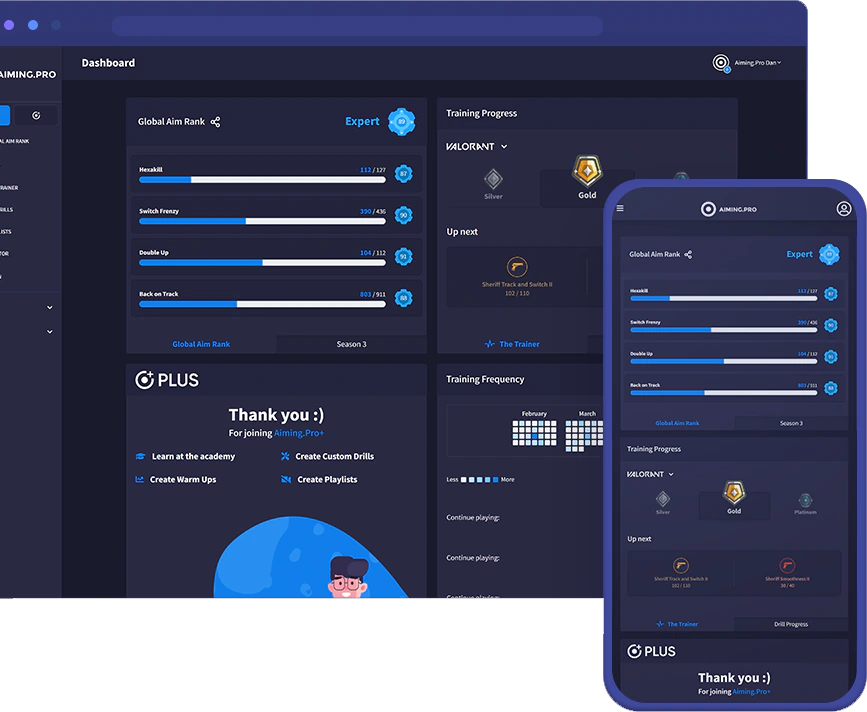
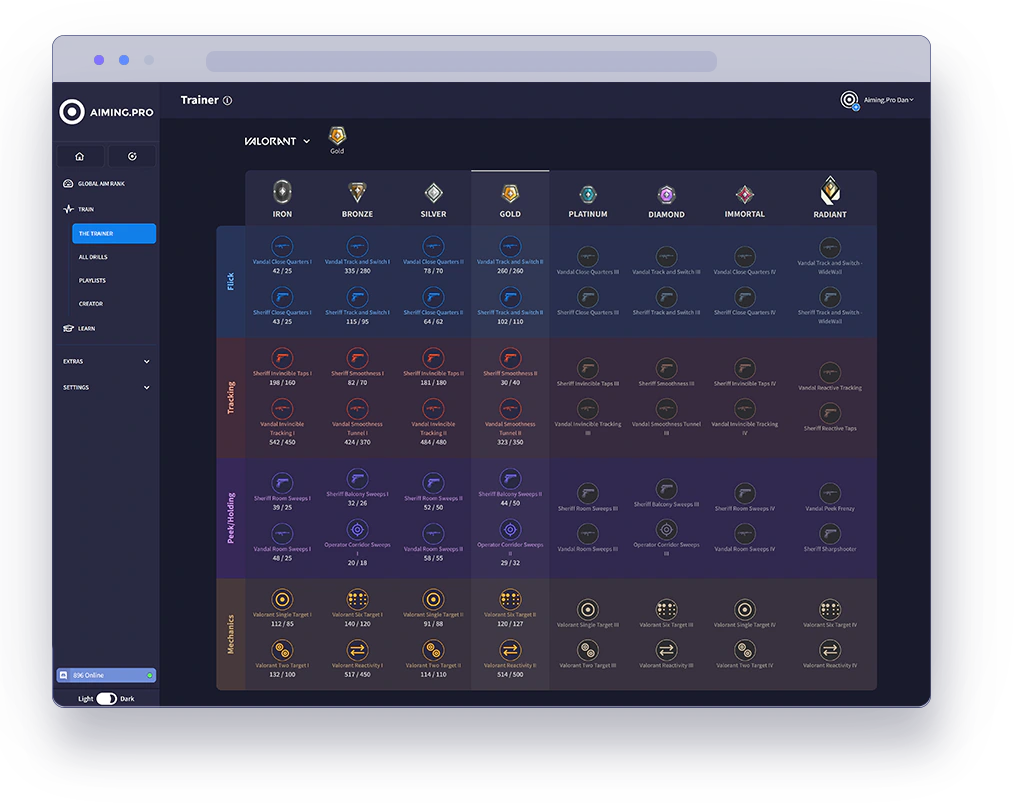
The Trainer is the best way to rank up in specific
FPS games using our aim trainer.
Our pros have analysed each game’s core concept
to carefully select drills that optimise your aim in the
areas that count. Hit the target goal in each level
and keep moving forwards to join the elite ranks of
Valorant, Apex, CSGO and COD.
Start your journey with The Trainer now
to unleash your full gaming potential.





See how you stack up against millions of players in our global community. Getting ranked lets you compete in our latest season of drills and weekly challenges.
Rank your aim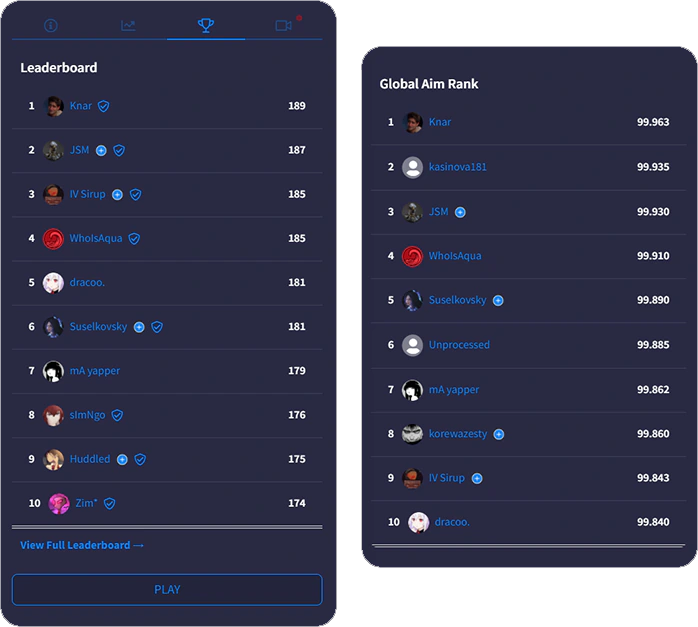
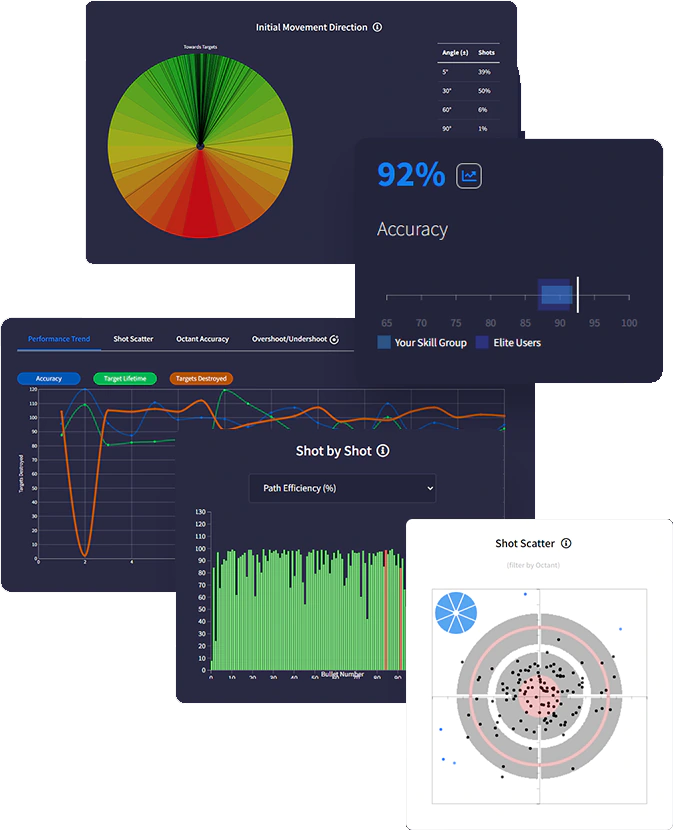
Get a deeper understanding of your performance with
with advanced data tracking. Discover insights that
uncover your strengths & weaknesses so you know
exactly how to optimise using actionable feedback.
Track everything after each drill with tons of metrics
measuring accuracy, reaction times, mouse speed,
move angles and more - the most in-depth analytics
ever built in an aim trainer.
Intelligently predict effective routines on evaluation of
your stats and trends. Analysing performance data
gives personalised feedback recommending skill areas for optimisation.
We support total synchronicity with all favourite FPS games. Our mouse sensitivity, FOV conversion, weapons and ADS variability accurately match real gaming physics ensuring all your aim gains translate into actual improved gameplay.

Sync sensitivity settings
to all FPS games

Adjust FOV to match
in-game preferences

Recreate ADS zoom &
sensitivity for every scope

Match weapon parameters
including rate of fire

Customise crosshair, hit
markers, textures & targets
Add your own sounds for
shots, hits, spawn & more
Because these cameras were often installed and never updated. A device running a view.shtml page is likely 10–15 years old, running on default settings, and critically—often unsecured or protected by a weak default password.
: In many jurisdictions, accessing a private computer network or device without authorization violates cyber-security laws, such as the Computer Fraud and Abuse Act (CFAA) in the United States, even if the device lacks password protection.
The term “view.shtml” refers to a specific naming convention commonly used in older network cameras and web server applications. The “view” part of the filename is descriptive; it signals to users that the purpose of this webpage is to display or “view” something, typically a live camera feed.
If the installer configures the camera to be accessible from the outside world but fails to change the default settings, search engines can find it. Automated web crawlers constantly scan the internet, discover these open camera pages, and index them into Google's database just like a regular blog or ecommerce website. The Risk of Default Configurations
user wants a long article for the keyword "Inurl View.shtml Near Me". This appears to be a search query related to finding specific web pages, possibly for security or reconnaissance purposes. I need to follow the search plan outlined in the hints. The plan has three rounds: Round One focuses on explaining the Google dork "inurl:view.shtml" and how to use it locally, along with security risks. Round Two covers finding vulnerable devices using this dork, building custom search scripts, and integrating with tools like Maltego. Round Three is about advanced applications for OSINT, IoT security, and alternative search engines. I'll execute the searches as specified. search results for Round One are in. I have information about Google dorks, security cameras, local search usage, vulnerabilities, webcams, Shodan, and IoT devices. However, some queries like "site:view.shtml inurl:view.shtml" and "inurl:view.shtml IoT devices list" didn't yield specific results. I'll proceed to Round Two, which focuses on finding vulnerable devices using this dork, building custom search scripts, and integrating with tools like Maltego. I'll need to search for more specific dorks and automation tools. search results for Round Two have provided additional dorks, some exploit information, and automation tools. I didn't find specific results for Maltego transforms or localhost searches. For Round Three, I need to cover advanced OSINT applications, IoT security, and alternative search engines. I'll search for OSINT techniques, IoT security concerns, Shodan queries, Censys, and other related dorks. search results provide a good amount of information for the article. I'll structure the article with an introduction explaining Google Dorking and the specific keyword, then cover the dork syntax, how to localize searches, security risks, vulnerabilities like SSI injection, practical applications for OSINT and IoT security, and ethical considerations with defensive measures. I'll cite relevant sources throughout. Now I'll write the article. internet is a vast ocean of information, and standard search engines like Google only skim the surface. However, beneath that surface lies a treasure trove of data, from exposed security cameras to sensitive login pages, all discoverable with specialized search strings known as "Google Dorks." Among the most common and revealing of these advanced queries is . Inurl View.shtml Near Me
The power to find exposed devices comes with a monumental responsibility. Using any form of inurl:view.shtml dork to access a device you do not own or have explicit permission to test is . Accessing a private camera feed is a direct violation of privacy, and scanning a web server without authorization violates computer crime laws in most jurisdictions.
It looks like you're trying to combine a ( inurl:View.shtml ) with a location-based phrase ("Near Me"). Unfortunately, that doesn't work directly — search engines don't interpret "Near Me" as coordinates when mixed with inurl: .
Search engines constantly index the public web. If a device or page is public, Google will find it unless explicitly told not to. Breaking Down the Query
Using advanced search operators to bypass intended privacy and security measures is often considered malicious. Many of the vulnerable feeds found through these methods have been abused for unauthorized surveillance. Large organizations have suffered data breaches and privacy lawsuits from exposing camera feeds or sensitive documents that were found via simple Google dorks. Because these cameras were often installed and never updated
Here’s how to approach this depending on what you actually need:
In the context of network hardware, older generations of IP (Internet Protocol) cameras used .shtml pages to serve the live video control dashboard. When a user logs into the camera via a web browser, the view.shtml page loads the video stream, pan-tilt-zoom (PTZ) controls, and device settings.
While curiosity drives most people to this search, it is imperative to discuss the legality and ethics.
Universal Plug and Play (UPnP) can automatically open ports on a home router, exposing the camera directly to the wider internet. The term “view
"Inurl: View.shtml Near Me" is not just a random string of words; it is a focused command that leverages Google's powerful search operators to uncover a specific category of web page. Understanding what this string does reveals the power of advanced search and the ongoing challenge of keeping private internet-connected devices secure. This knowledge empowers you to be a more effective, precise searcher and more aware of your own digital security footprint.
If you own an IP camera or a DVR/NVR system that uses .shtml pages, you are likely vulnerable. Here is how to ensure you do not appear in a "Near Me" search.
Google does not have a direct near me operator, but you can combine your dork with several other strategies to find local feeds:
Searching "inurl view.shtml near me" technically means looking for unsecured cameras in your geographical area. While Google Search doesn't automatically map these, users often combine the search term with local location keywords.