
0%
Filled with laugh-out-loud hilarious text and cartoons, the Diary of a Wimpy Kid series follows Greg Heffley as he records the daily trials and triumphs of friendship, family life and middle school where undersized weaklings have to share the hallways with kids who are taller, meaner and already shaving! On top of all that, Greg must be careful to avoid the dreaded CHEESE TOUCH!
The first book in the series was published in 2007 and became instantly popular for its relatable humor. Today, more than 300 million copies have been sold around the world!
I need to avoid any language that could be misconstrued as endorsement. Use distancing quotes for the phrase. Emphasize analysis, critique, and the dangers of the trope. The article should end on a note about responsible representation, acknowledging the tension. The length needs to be substantial—multiple sections, detailed paragraphs, around 1500+ words. Let me write. is a long-form article exploring the cultural, psychological, and artistic dimensions of the keyword
The audience or a secondary character feels compelled to protect the innocent figure from the corrupting influence of the taboo world.
The Fractured Mirror: Deconstructing the “Taboo Little Innocent” in Art, Psychology, and Culture
Their innocence is placed in direct opposition to something prohibited—be it forbidden knowledge, a dangerous social transgression, or a forbidden relationship.
This insight flips the conventional understanding. If the child harbors its own dark impulses, then the taboo around innocence may serve to protect adults from confronting uncomfortable truths about childhood—and about themselves. The thus becomes a screen onto which we project both our idealized longing for purity and our repressed awareness of its impossibility. taboo little innocent
In each case, the artist uses the to generate moral discomfort, forcing audiences to confront their own complicity in the very violations they condemn. This is the paradox of transgressive art: by depicting the taboo, it may reinforce the prohibition, but it also risks normalizing the very acts it seeks to critique.
Anthropologist Mary Douglas, in her seminal work Purity and Danger , argued that taboos are not arbitrary. They arise to protect social categories that are perceived as vulnerable to contamination. Innocence, as a category, is perhaps the most vulnerable of all. To defile an innocent is not just a crime against an individual; it is a ritual pollution that threatens the moral order of the entire community.
I can provide specific or plot structures based on your goals. Share public link
Ultimately, the enduring resonance of the "taboo little innocent" archetype lies in its ability to reflect the dual nature of the human condition. Humans are rarely one-dimensional; individuals constantly balance a desire for safety, order, and purity with a competing curiosity about the dark, the chaotic, and the forbidden. By exploring these themes through art, literature, and media, society finds a safe, controlled sandbox to confront its deepest contradictions. I need to avoid any language that could
Writers use the "taboo little innocent" archetype as a tool to highlight specific themes in their work.
Taboo: Little Innocent is a word-guessing game designed for younger players, typically aged 6 and above. It's a variant of the popular Taboo game, adapted for kids with a more innocent and fun approach. The game aims to encourage creative thinking, quick reflexes, and teamwork.
in an academic or literary sense regarding this topic, you may be interested in: Literary Analysis : Research on Victorian-era "taboo" literature
The Psychology of “Taboo Little Innocent”: Why Contrasts Captivate Human Culture The article should end on a note about
Why are audiences drawn to stories where purity meets the forbidden? Psychology offers a few explanations.
The goal is for your team to score the most points by correctly guessing as many words as possible from cards, without the "clue-giver" saying any of the forbidden words listed on the card. Amazon Luna How to Play Divide into Teams
Stories like Little Red Riding Hood or Bluebeard explicitly pit vulnerable, innocent protagonists against dark, predatory, or forbidden forces. These stories historically served as cautionary tales, using the stark contrast to teach societal boundaries.
Henry James’s Daisy Miller (1878) is a masterclass in the social taboo surrounding the innocent. Daisy, a young, free-spirited American girl traveling in Europe, is deemed "innocent" by the reader but "improper" by society. The taboo here is not her action, but her existence ; her natural behavior violates the stiff code of European etiquette, leading to her social (and eventual physical) death. The taboo is the reaction to innocence, not the innocence itself.
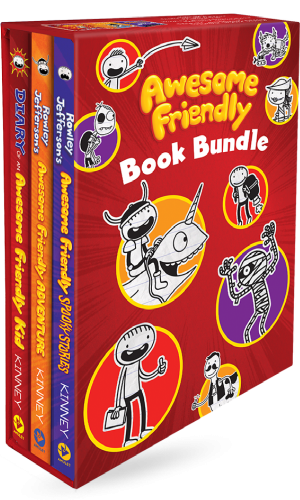
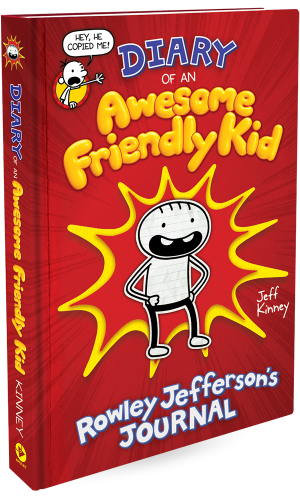
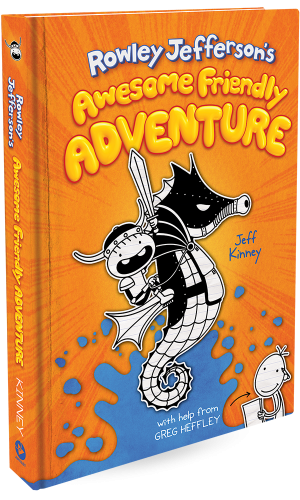
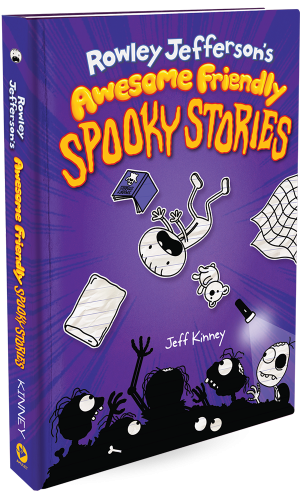
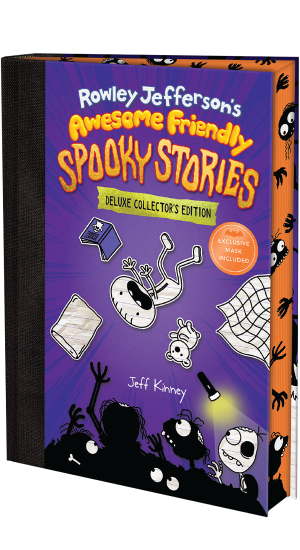
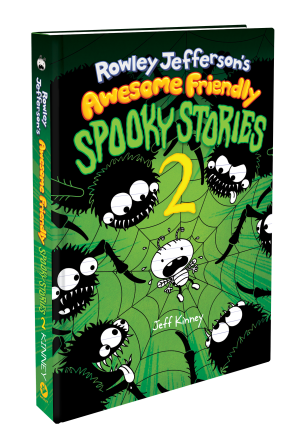
Get ready to see the Wimpy Kid world in a whole new way! Written and illustrated from the hilarious imagination of Greg Heffley’s best friend, Rowley Jefferson, the Awesome Friendly Kid series is filled with new adventures and vibrant stories that will have readers in stitches!
Click or scroll
through the books
I need to avoid any language that could be misconstrued as endorsement. Use distancing quotes for the phrase. Emphasize analysis, critique, and the dangers of the trope. The article should end on a note about responsible representation, acknowledging the tension. The length needs to be substantial—multiple sections, detailed paragraphs, around 1500+ words. Let me write. is a long-form article exploring the cultural, psychological, and artistic dimensions of the keyword
The audience or a secondary character feels compelled to protect the innocent figure from the corrupting influence of the taboo world.
The Fractured Mirror: Deconstructing the “Taboo Little Innocent” in Art, Psychology, and Culture
Their innocence is placed in direct opposition to something prohibited—be it forbidden knowledge, a dangerous social transgression, or a forbidden relationship.
This insight flips the conventional understanding. If the child harbors its own dark impulses, then the taboo around innocence may serve to protect adults from confronting uncomfortable truths about childhood—and about themselves. The thus becomes a screen onto which we project both our idealized longing for purity and our repressed awareness of its impossibility.
In each case, the artist uses the to generate moral discomfort, forcing audiences to confront their own complicity in the very violations they condemn. This is the paradox of transgressive art: by depicting the taboo, it may reinforce the prohibition, but it also risks normalizing the very acts it seeks to critique.
Anthropologist Mary Douglas, in her seminal work Purity and Danger , argued that taboos are not arbitrary. They arise to protect social categories that are perceived as vulnerable to contamination. Innocence, as a category, is perhaps the most vulnerable of all. To defile an innocent is not just a crime against an individual; it is a ritual pollution that threatens the moral order of the entire community.
I can provide specific or plot structures based on your goals. Share public link
Ultimately, the enduring resonance of the "taboo little innocent" archetype lies in its ability to reflect the dual nature of the human condition. Humans are rarely one-dimensional; individuals constantly balance a desire for safety, order, and purity with a competing curiosity about the dark, the chaotic, and the forbidden. By exploring these themes through art, literature, and media, society finds a safe, controlled sandbox to confront its deepest contradictions.
Writers use the "taboo little innocent" archetype as a tool to highlight specific themes in their work.
Taboo: Little Innocent is a word-guessing game designed for younger players, typically aged 6 and above. It's a variant of the popular Taboo game, adapted for kids with a more innocent and fun approach. The game aims to encourage creative thinking, quick reflexes, and teamwork.
in an academic or literary sense regarding this topic, you may be interested in: Literary Analysis : Research on Victorian-era "taboo" literature
The Psychology of “Taboo Little Innocent”: Why Contrasts Captivate Human Culture
Why are audiences drawn to stories where purity meets the forbidden? Psychology offers a few explanations.
The goal is for your team to score the most points by correctly guessing as many words as possible from cards, without the "clue-giver" saying any of the forbidden words listed on the card. Amazon Luna How to Play Divide into Teams
Stories like Little Red Riding Hood or Bluebeard explicitly pit vulnerable, innocent protagonists against dark, predatory, or forbidden forces. These stories historically served as cautionary tales, using the stark contrast to teach societal boundaries.
Henry James’s Daisy Miller (1878) is a masterclass in the social taboo surrounding the innocent. Daisy, a young, free-spirited American girl traveling in Europe, is deemed "innocent" by the reader but "improper" by society. The taboo here is not her action, but her existence ; her natural behavior violates the stiff code of European etiquette, leading to her social (and eventual physical) death. The taboo is the reaction to innocence, not the innocence itself.